

Culture Eats Strategy for Breakfast: What It Means
Learn what culture eats strategy for breakfast means, why the quote is often misattributed, and how leaders turn strategy into daily behavior.
16 minutesRead article
Perspectives on leadership, coaching and the work of building stronger teams.
249 articles, newest first.
Learn what culture eats strategy for breakfast means, why the quote is often misattributed, and how leaders turn strategy into daily behavior.

A practical process for translating strategic choices into leadership moments, capacities, observable behavior, reinforcement, and evidence.
Learn what coaching at scale means, how it differs from training and executive coaching, and which systems protect quality, context, and confidentiality.

Seven failure patterns explain why strategy weakens between executive intent and team action, and how leaders can repair the translation.
Explore the archive.

An honest breakdown of what AI coaching does well, where it reaches its limit, and why the deepest leadership work still requires a human coach — plus how hybrid programs pair the two.

Leadership alignment turns strategy into consistent decisions and behavior. Learn what it means, how to spot misalignment, and how to measure it.

Only 46% of workers trust AI at work. Heather Conklin on why closing the leadership gap matters more than any AI investment.

Systems that combine ai coaching and human expertise are changing leadership development. Read the blog to find out why.

Spark is Torch's AI coaching agent. Check out the guide to learn how Spark can scale leadership development across your org.

Leadership transformation patterns surfaced from coaching participants that are making positive waves through organizations.

CFO and CPO advice on how to get stakeholder buy-in for coaching—real talk, proven tactics, and what to say before you ask for budget.

Leading through constant change requires vulnerability, not certainty. Four executives on the skills that actually keep teams grounded.

The 5% of businesses succeeding with AI use social learning to accelerate adoption. Discover why these methods helps leaders develop AI capabilities faster.

At Charter Workplace Summit, Torch coaches heard the same challenges across dozens of sessions. Leaders need support, not just tools.

The tech works. The people part doesn’t, unless you lead it right. Inside Torch + Zapier’s playbook for real AI readiness.

Why 95% of AI pilots fail? Companies focus on technical training but miss leadership development. Torch reveals what the 5% get right.
CFO and CPO advice on how to get stakeholder buy-in for coaching—real talk, proven tactics, and what to say before you ask for budget.

Learn how to create teams that share cognitive load, make faster decisions, and prevent burnout through distributed leadership.

Discover what the Torch–Praxis acquisition reveals when coaching meets AI and how it will impact the future of leadership development.
Torch + Praxis combine expert coaching, AI-powered practice, and deep insights into a leadership system built for pace, pressure, and change.
CFO and CPO advice on how to get stakeholder buy-in for coaching—real talk, proven tactics, and what to say before you ask for budget.

Trust drives transformation. Torch’s 2025 report shows how leadership rooted in trust accelerates AI success.

Ready to lead through AI uncertainty? See how trust, not tech, is the leadership advantage AI can’t replace.

CFO and CPO advice on how to get stakeholder buy-in for coaching—real talk, proven tactics, and what to say before you ask for budget.

What makes leadership coaching effective? It starts with coaches who’ve actually led. Here’s what to look for in a coach provider.

Discover AI Change Catalyst 90, a 3-month contextual coaching program accelerating leadership readiness for ongoing AI-driven transformation.

Traditional leadership training is failing. Discover how building leadership capacities drives real performance and impact.

Cut through the AI coaching hype—see how contextual coaching drives real transformation, building leaders who evolve with change.

Discover how Torch is reimagining leadership development to help leaders and organizations evolve together for a world in constant change

Is laissez-faire leadership right today? Discover how to make it work with Torch's contextual coaching.

Discover how charismatic leadership evolves with Torch's contextual coaching—transforming charm into authentic impact and lasting results.

We talked to key leaders at Torch to get their perspective on which leadership development trends lie ahead in 2025. Here are the top 5 predictions.

Skills like adaptability and agility are more important than ever. Learn five key strategies for building a more adaptable and agile team.

Succession planning is a challenge most organizations have to face at some point. We share best practices and examples of how to do so successfully.
Succession planning is a challenge most organizations have to face at some point. We share best practices and examples of how to do so successfully.

Skill development is critical for organizational well-being. Learn how to future-proof your workforce with the right approach.
Compare coaching, mentoring and sponsorship: their roles, costs and uses, with practical examples to help you choose the right support for your people.

Outcome-based coaching targets specific business challenges to deliver lasting results. Learn how Torch's coaching solutions support this approach.

If you’re dissatisfied in your current role, you’re not alone. Career coaching might be the next step you need to reimagine your future.

These key elements will help you maximize success in your group coaching program and create positive outcomes for your company.

While group coaching can be beneficial in most contexts, there are a number of specific business priorities where it is most commonly used, and is well- suited.

Help your people leaders effectively tackle common management pitfalls and challenges with this set of resources from Dr. Mandy Varley.
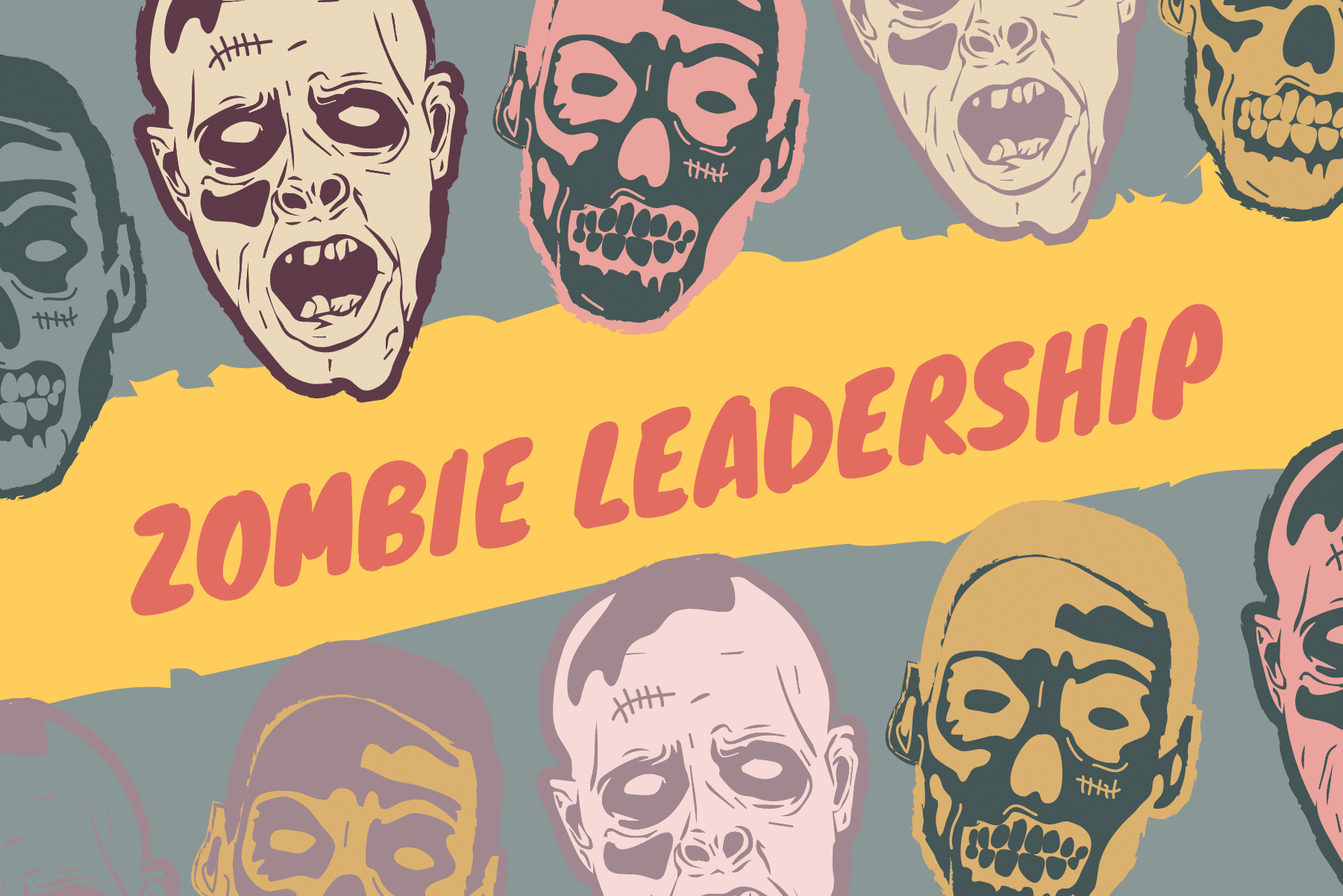
What is zombie leadership? Find out how this phenomenon perpetuates longstanding leadership myths and how you can fight back.

Leadership development for managers through coaching is the secret weapon for supporting your employees. Read the blog post to learn how.

In this beginner's guide to group coaching, learn how group coaching leverages the knowledge of individuals, and how it transforms your team.

In this article, we detail the good and the bad about executive coaching, giving you the information you need to decide if it's right for you.

A coached manager has a far-reaching positive impact on their direct reports and their team, which ultimately drives larger change across the organization.

The positive ripple effects of manager coaching extend beyond the individual. Learn the 5 ways manager coaching can affect your organization.

Organizations struggle to access the data from their coaching programs to measure program success. We leverage a four-tiered framework, based on the Kirkpatrick model, to measure the effectiveness of learning and training programs, including coaching.
Torch Coach Sophia Toh shares her advice on how to gain visibility as a leader in Curiouser's "Ask a Coach" video series.

Curious about the hot trends in people development? Check out our Torch-approved media recommendations to get up to date.

A new report explores “the coaching ripple effect”, when the positive change from coaching extends to individuals, teams and organizations.

By building momentum and a sense of progress early on, Torch coaching and platform fosters an environment conducive to behavior change. Let’s take a quick peek at the three primary components that make up Torch’s onboarding experience.


How does the servant leader fit into the modern workplace? We explore this question, and more, in this article.

Democratic leadership lets multiple people partake in the decision-making process. Learn the framework, pros & cons & how to apply its principles in this guide.

Bureaucracy doesn’t inspire a ton of positive associations. But what does this look like in the form of leadership? And is it an effective style to utilize?

Lattice's coaching program helps their team develop leadership skills for people managers across the organization. With Torch, more leaders are able to experience coaching through inclusive, intentional programs, and program management is simplified by the Torch platform.

Curious about the hot trends in people development? Check out our Torch-approved media recommendations to get up to date.

Tips from Torch executive coaches on how to get executive buy-in for coaching programs.
Torch Coach Sophia Toh shares her advice on how to gain visibility as a leader in Curiouser's "Ask a Coach" video series.

How leveraging moments that matter in your coaching program can unlock potential and growth in your organization.
Torch Coach, Ranjini Rao, shares her advice on how to get employees excited about coaching in Curiouser's "Ask a Coach" video series.

Need to get motivated after a break from coaching? Here are tips from our coaches.

Curious about the hot trends in people development? Check out our Torch-approved media recommendations to get up to date.
What is a coaching culture and why is important to employee performance? A coaching culture can help increase employee growth plus top-level org KPIs.

The future of coaching is here. Check out our top takeaways from the 2023 NYU conference - AI, coaching culture, and inclusion.

How executive coaches can help LBTQIA+ employees navigate big questions of identity, and help to create more inclusive workplaces.

A roundtable discussion where HR Leaders reveal the challenges and successes delivering leadership coaching programs

Interested in creating a better work/life balance? Torch coaches offer their tips and tricks.
Torch Coach, Sue Steinfeld, shares her advice on how to create positive accountability in Curiouser's "Ask a Coach" video series.

Curious about the hot trends in leadership? Read, watch, and listen to our Torch-approved recs to get up to date.
How can coaching can support LGBTQIA+ employees? Find out in the Science Lessons sections of Torch's newsletter, Curiouser.
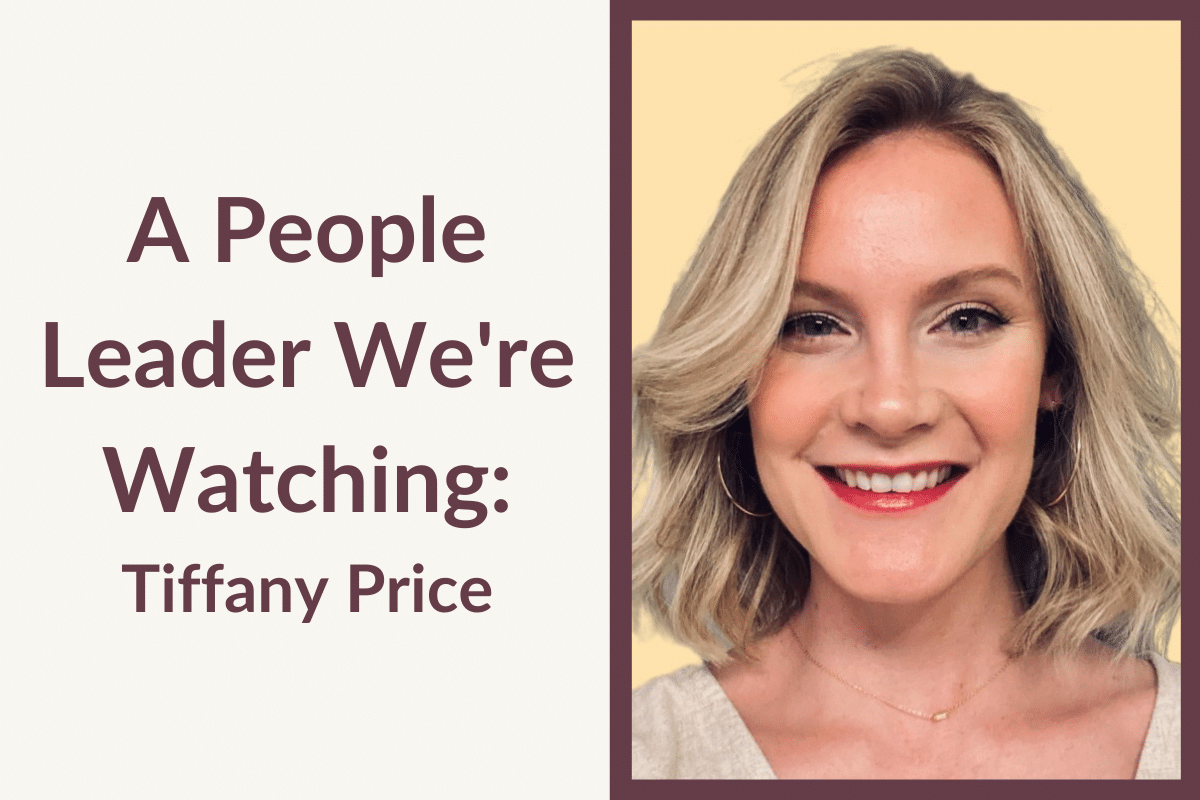
Read our Q&A with Tiffany Price, Director of HR at Blueprint Test Prep, on why she chose to make an investment in coaching and how she measures success.

New HR.com research finds that HR professionals are interested in coaching to improve culture and performance.

Why one-size-fits-all leadership training isn't effective in driving results, and how coaching drives better results.

How coaches help women find their power and agency, creating a ripple effect of inclusion across organizations.
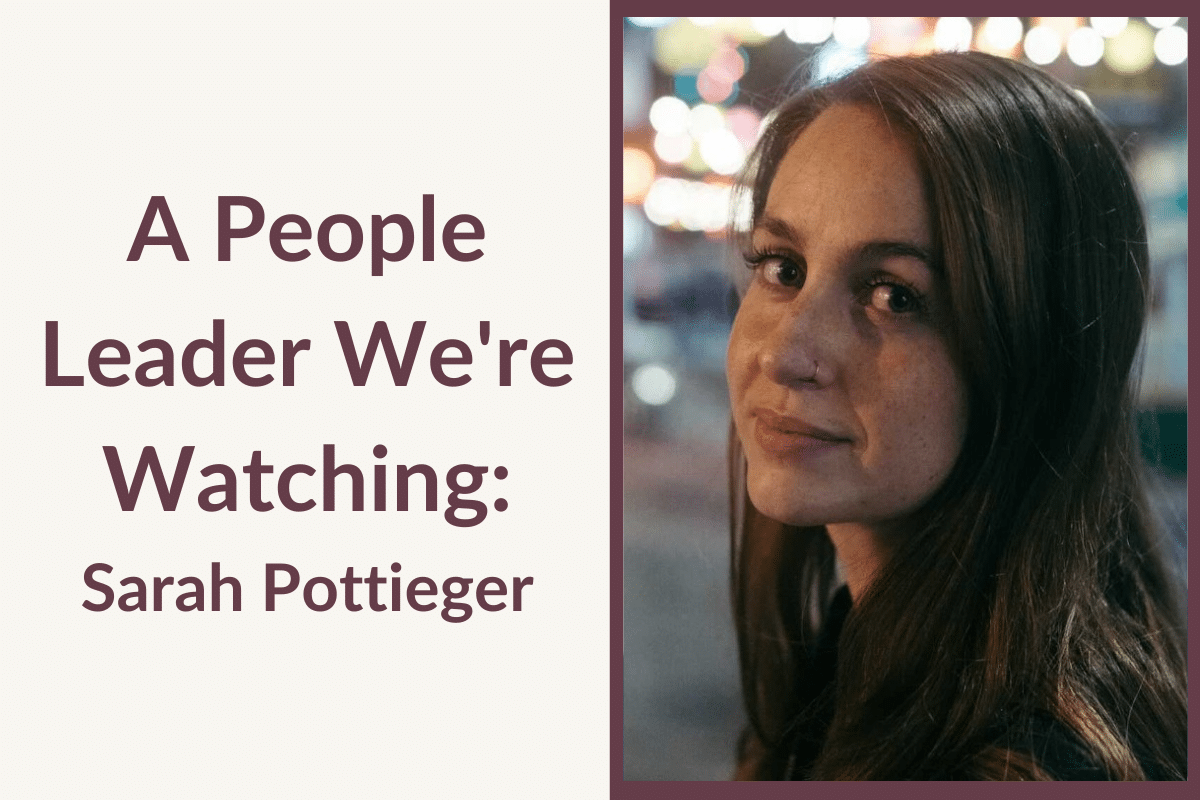
For this issue of our newsletter, we spoke to Sarah Pottieger, Head of People at Forum Brands. Sarah shared with us the goals of their coaching programs, how coaching fits into their larger people development strategy, and how it aligns with their business objectives.
Science Lessons from Torch's newsletter Curiouser No.6 shares some insights into how coached leaders change their relationship to feedback.

Read, watch, and listen to Torch-approved recs that address how to change your relationship with feedback.
When facing difficult conversation, it's easy to become defensive. Torch Coach, Michelle Arbid, shares her advice on how to be less defensive and have more productive conversations in Curiouser's "Ask a Coach."

Interested in becoming a more receptive leader? Torch coaches offer guidance on how to open up to feedback and consider other perspectives.

What lessons from coaching Black leaders can teach all of us about how to create more inclusive workplaces. Keshawn Hughes, Torch executive coach, an International Coaching Federation certified neuro-coach, and a leadership consultant shares her thoughts.
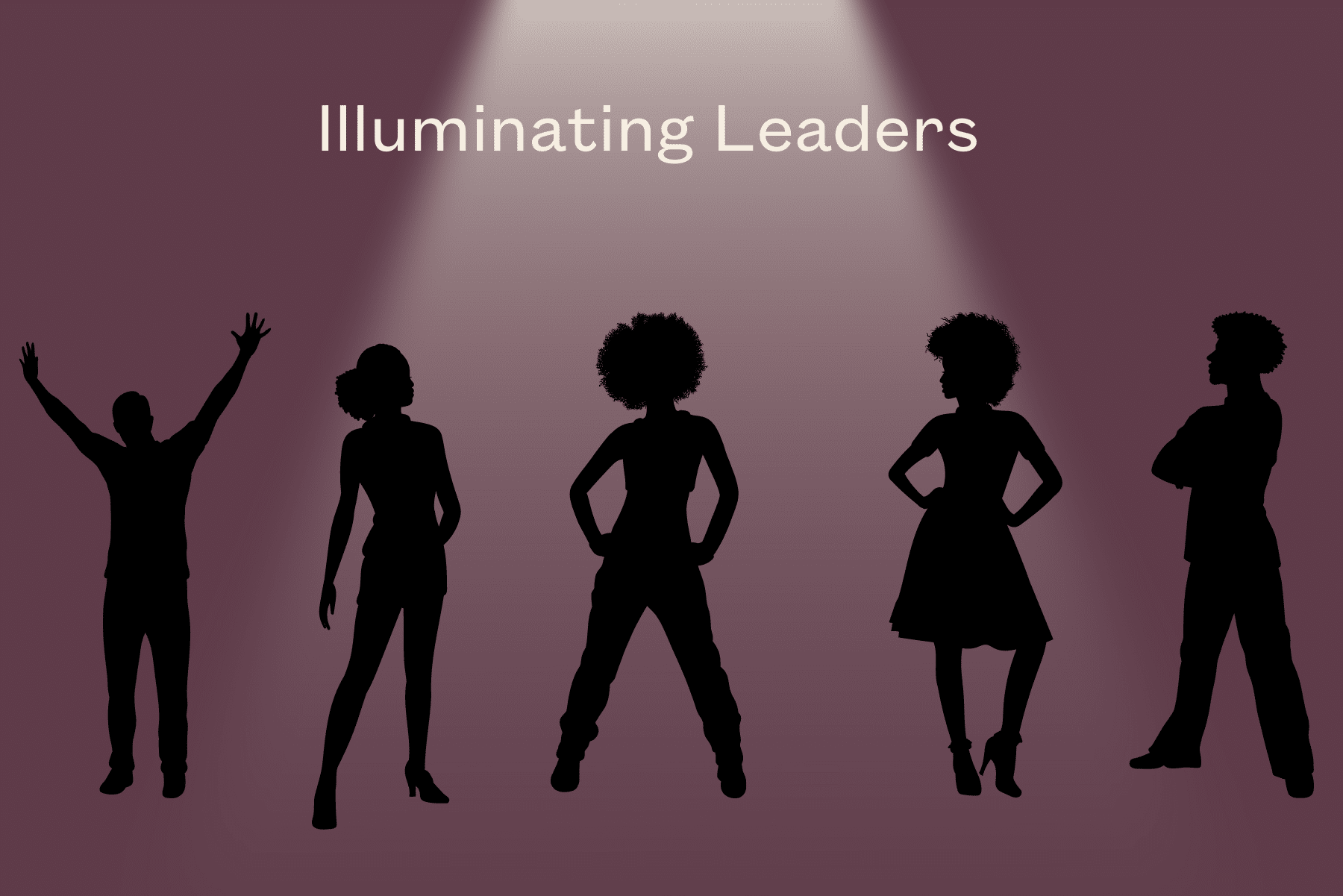
To be able to imagine our own potential, we need to see other leaders who look like us. We’re shining a spotlight on Black leaders who have impacted and inspired our Torch team. See stories of leaders across levels, ages and industries, from athletes to politicians to leaders embedded in an organization.
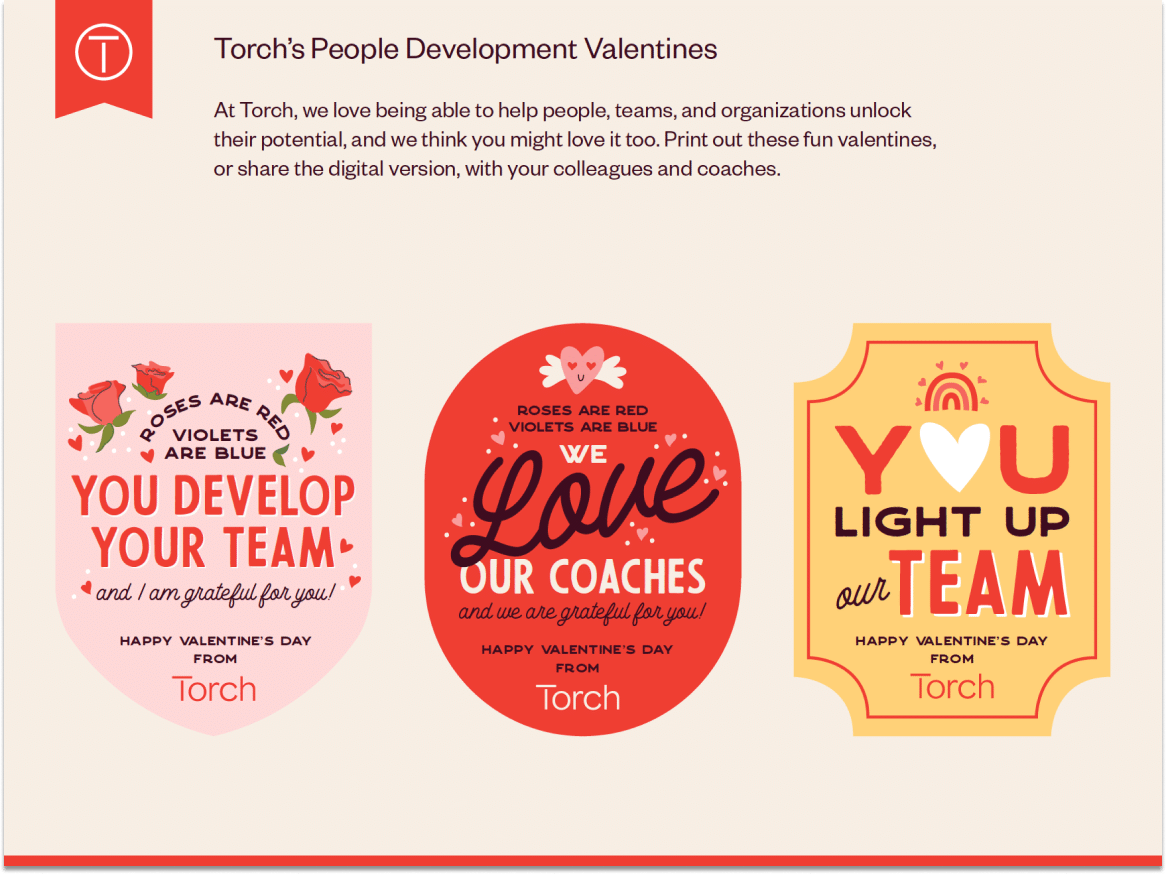
We’re excited to share valentines that celebrate the leaders, the people developers, and coaches in your life. You can print or save these images and send them to the individuals that you see making an impact, setting an example, and investing in others.
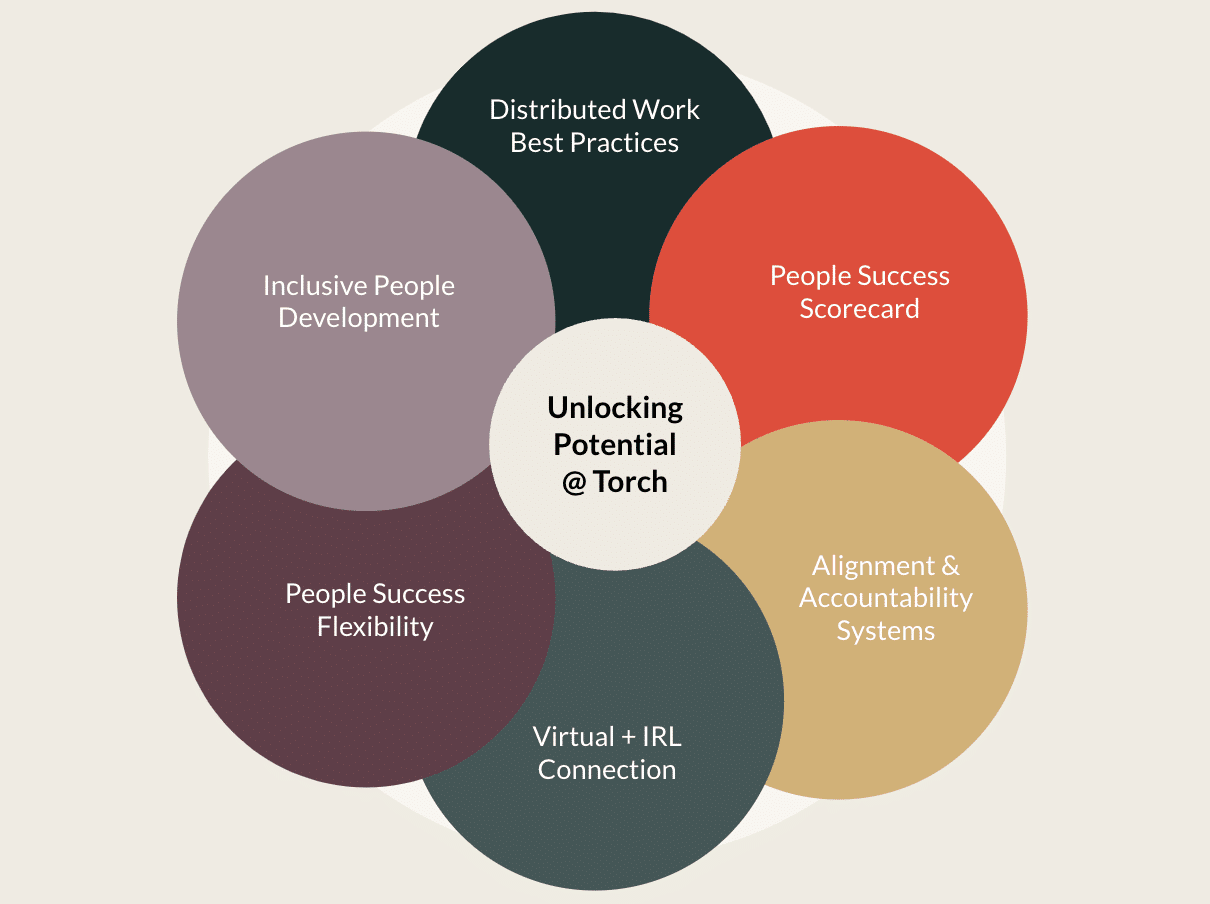
To empower our own people to be successful, we have designed a People Success strategy based on the science of happiness at work.
Science Lessons from Curiouser No.5 provides some insights from a study that found long-term behavior change from coaching.

Read, watch, and listen to Torch-approved recs that address how coaching can transform leaders and organizations.
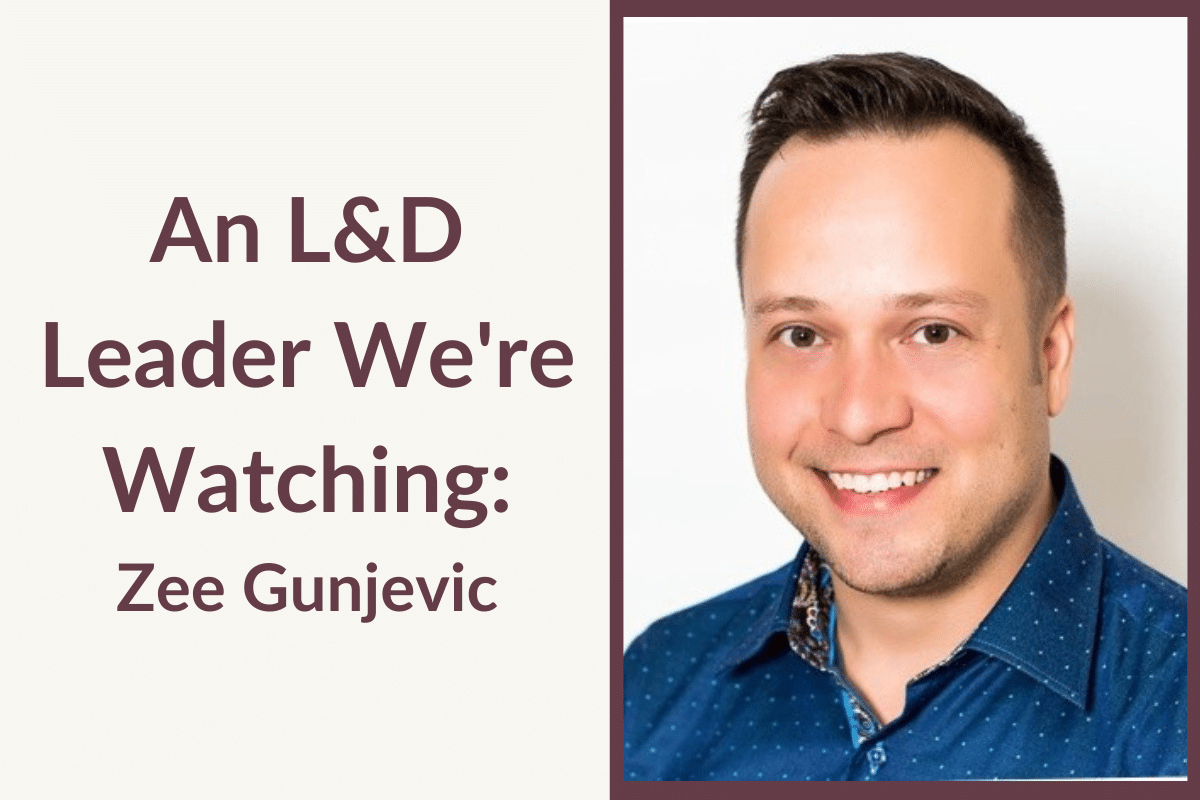
Learn how one learning and development (L&D) leader, Zee Gunjevic, saw the impact of coaching programs in his organization in Curiouser No.5's "A Leader We're Watching"
Interested in giving and receiving feedback more effectively? A Torch coach shares advice and a Ted Lasso example in Curiouser's "Ask a Coach."

Torch coaches offer guidance on how coaching affects clients' relationships with lead their direct reports, teams, and organizations.
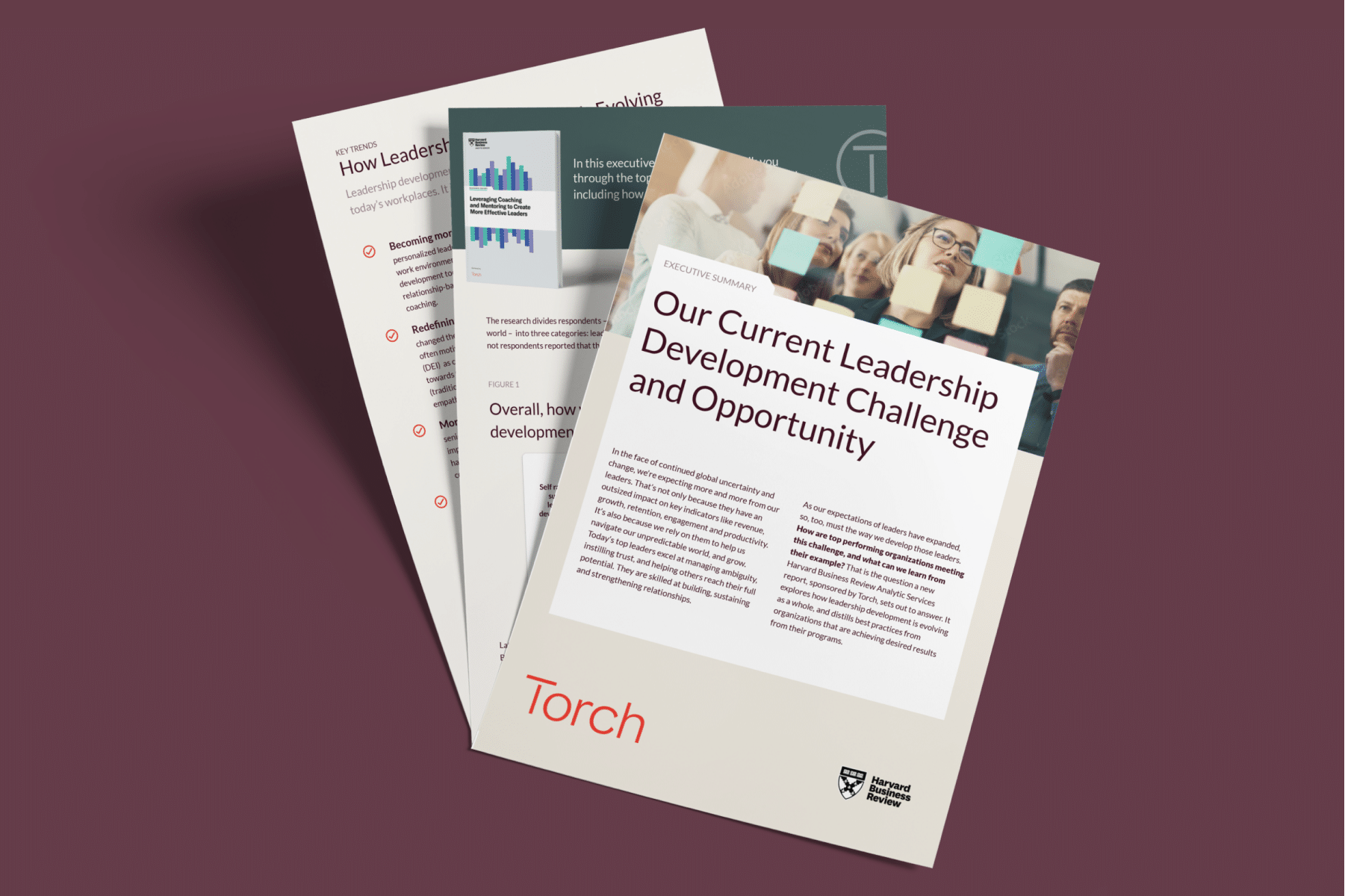
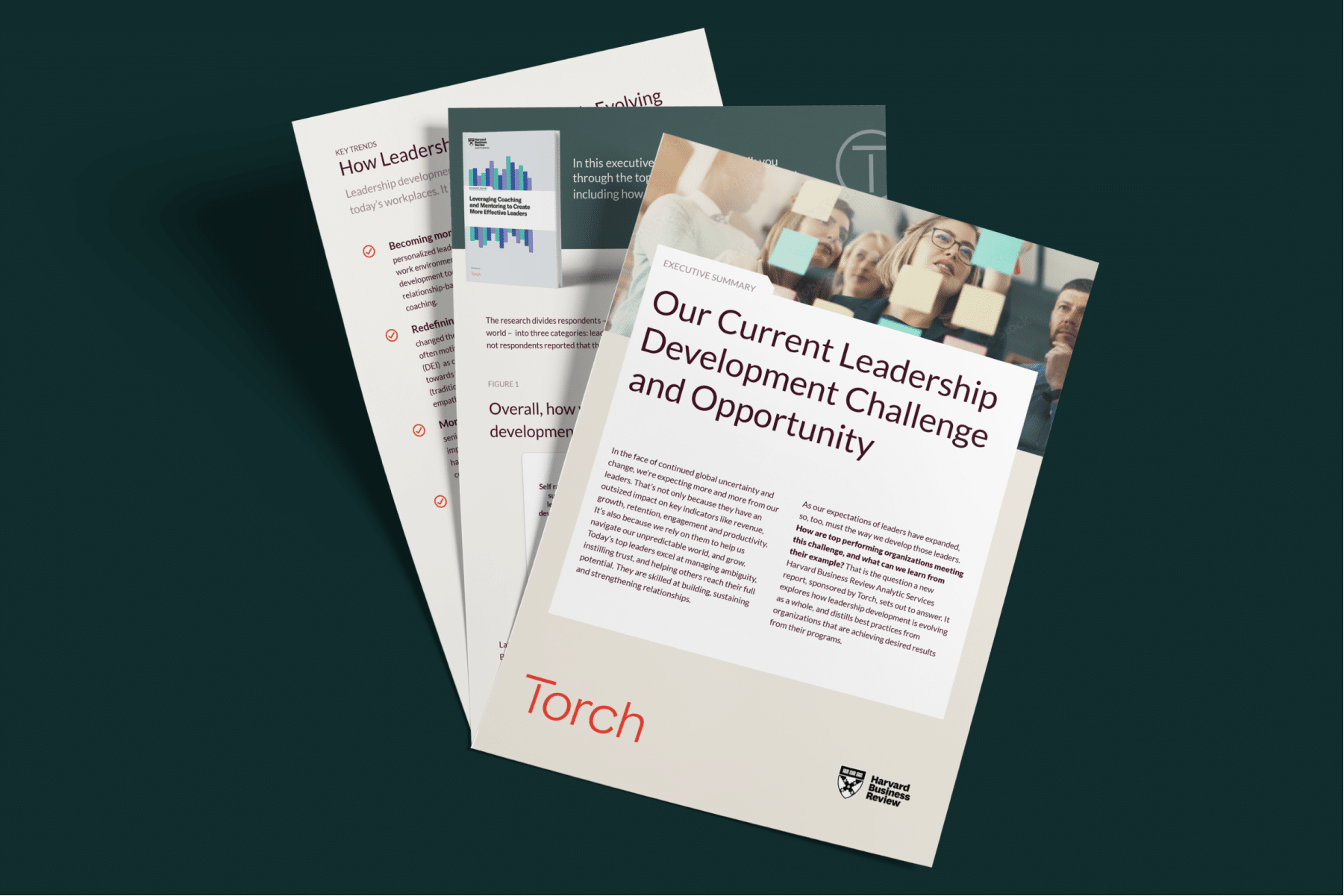
A new Harvard Business Review Analytic Services report, sponsored by Torch explores how leadership development is evolving, and distills best practices from organizations that are achieving desired results from their programs.
Interested in inspiring your teams to follow you? One Torch coach shares an insightful response in Curiouser's series, "Ask a Coach".

Torch-approved recs addressing important coaching skills to adopt as a manager, from our community newsletter Curiouser (No.4)
Science Lessons from Curiouser No.4 provides some insights from a recent study on giving effective feedback.
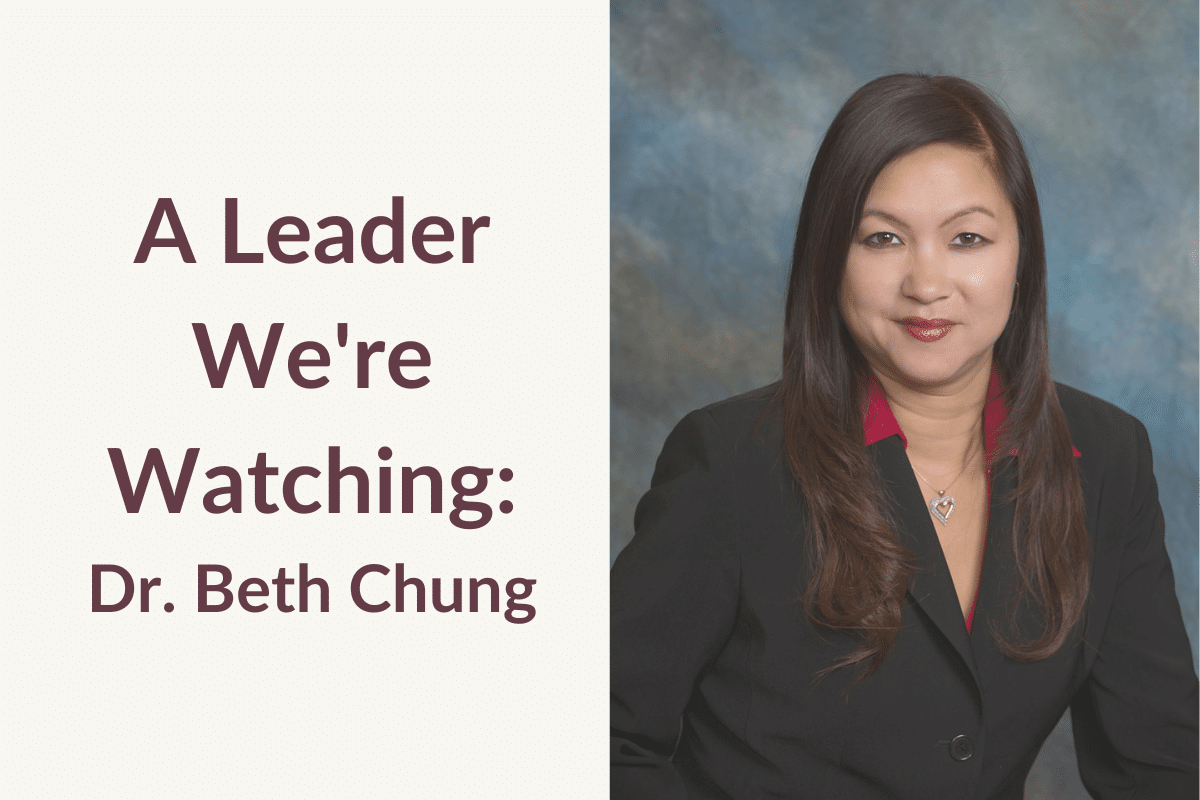
Learn how leaders can create more inclusive environments from DEI expert Beth Chung-Herrera in Curiouser No.4's "A Leader We're Watching."
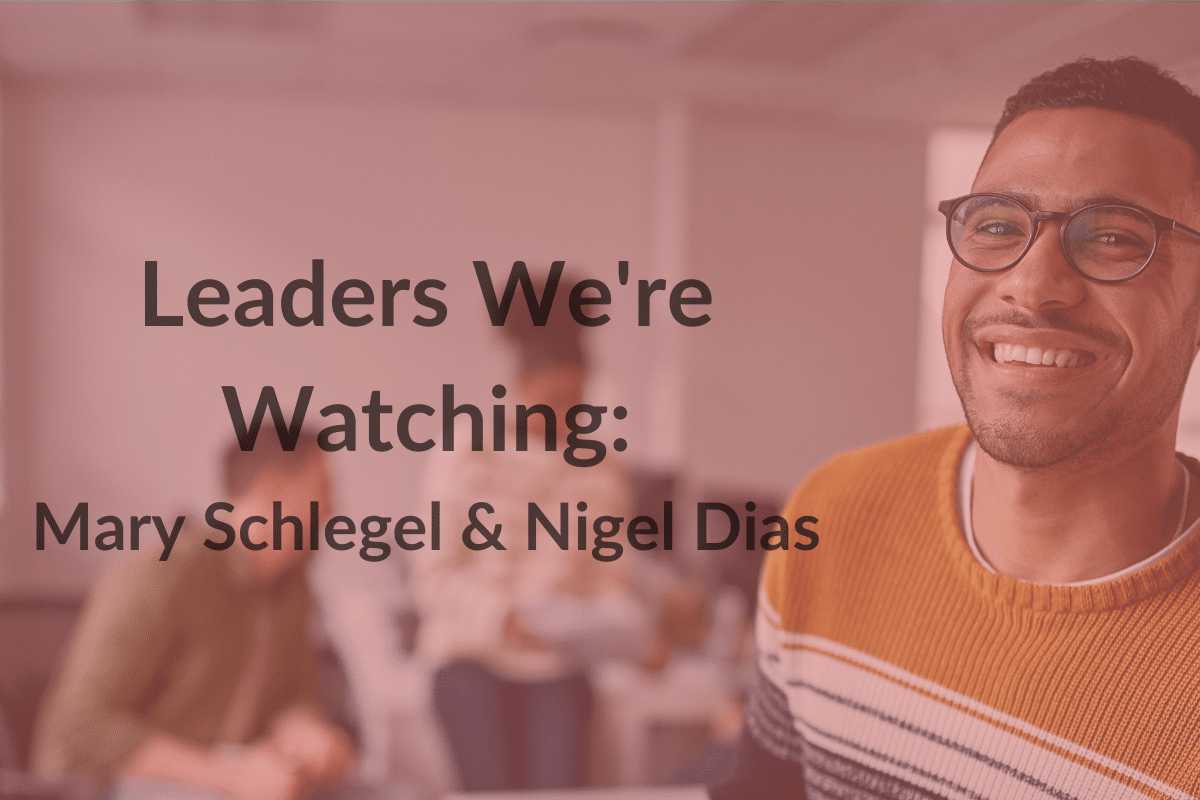
Read to learn why our innovative leaders think everyone should get a reverse mentor and why leaders should take a data-driven approach to leadership development in Curiouser's "Leaders We've Got an Eye On."
Interested in empowering your virtual teams? Science Lessons from Curiouser No.3 provides some insights from seminal research from 1965.

Torch-approved recommendations to satisfy your curiosity about teams, straight from our community newsletter Curiouser (No.3)
Interested in helping your team align on purpose? One Torch coach shares an insightful response in Curiouser's series, "Ask a Coach."

Torch coaches offer expert guidance to our Curiouser reader's question: "How can we get managers to learn more about their teams - such as their interests, motivations, and passions?"

How Reddit gave employees at every level access to coaching and mentoring on one platform — and measured higher retention, performance, and promotion rates among participants.

There are effective ways to structure and measure coaching programs but they primarily measure the success of your coaching program at the end of an engagement. How can you tell if coaching is effective during the engagement? What does improvement look like?
Interested in building cohesion in a diverse team? One Torch coach shares an insightful response in Curiouser's series, "Ask a Coach".
Interested in improving your problem solving skills? Science Lessons from Curiouser (No.2) addresses combating groupthink and leading with empathy.

Torch-approved recommendations to satisfy your curiosity, straight from our community newsletter Curiouser (No.2).

Torch coaches offer expert guidance to our subscriber question: "How do I cope with team realignment?"

Torch coach, Dana DeNault, discusses why effective leadership coaching should start with creating and cultivating a personal vision.
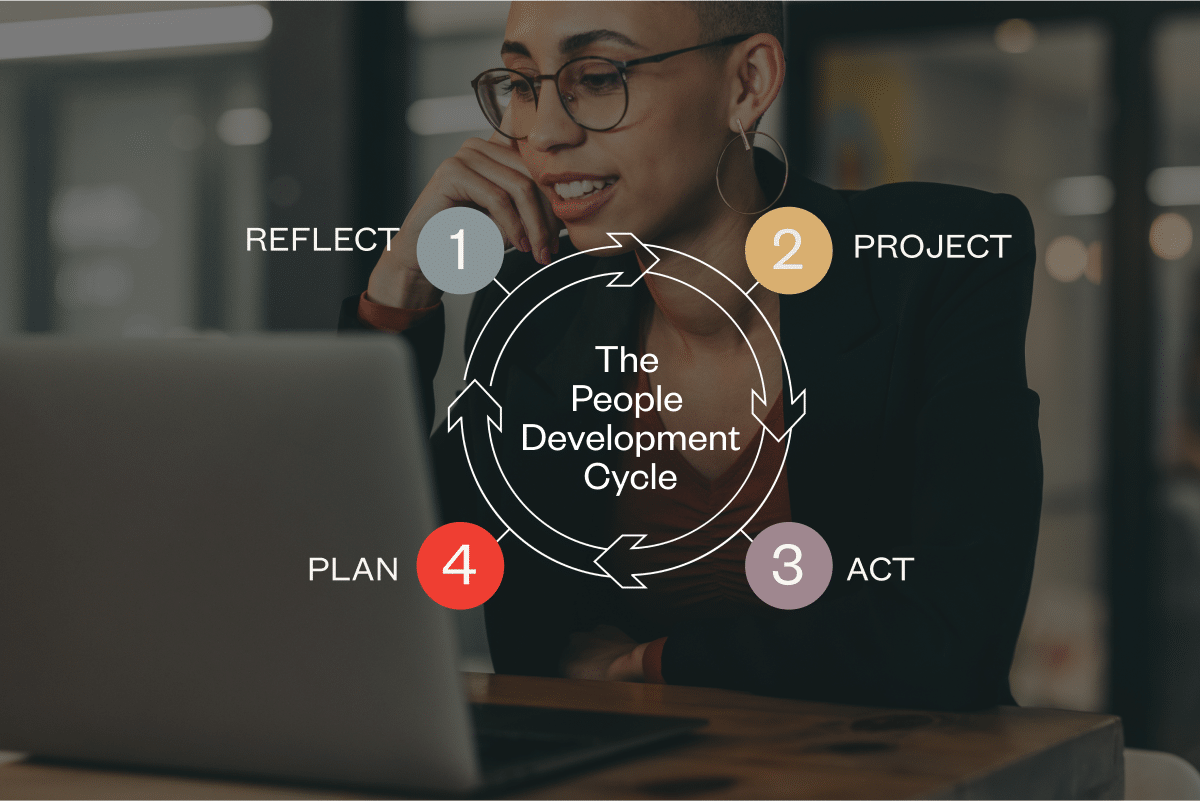
People development is the process of strengthening employee knowledge and skills, empowering everyone to contribute to their highest potential. One of the primary challenges with the ever-evolving field of people development is delivering a consistent, long-lasting impact on individuals and organizations. The People Development Cycle can help with the support of a coaching relationship.
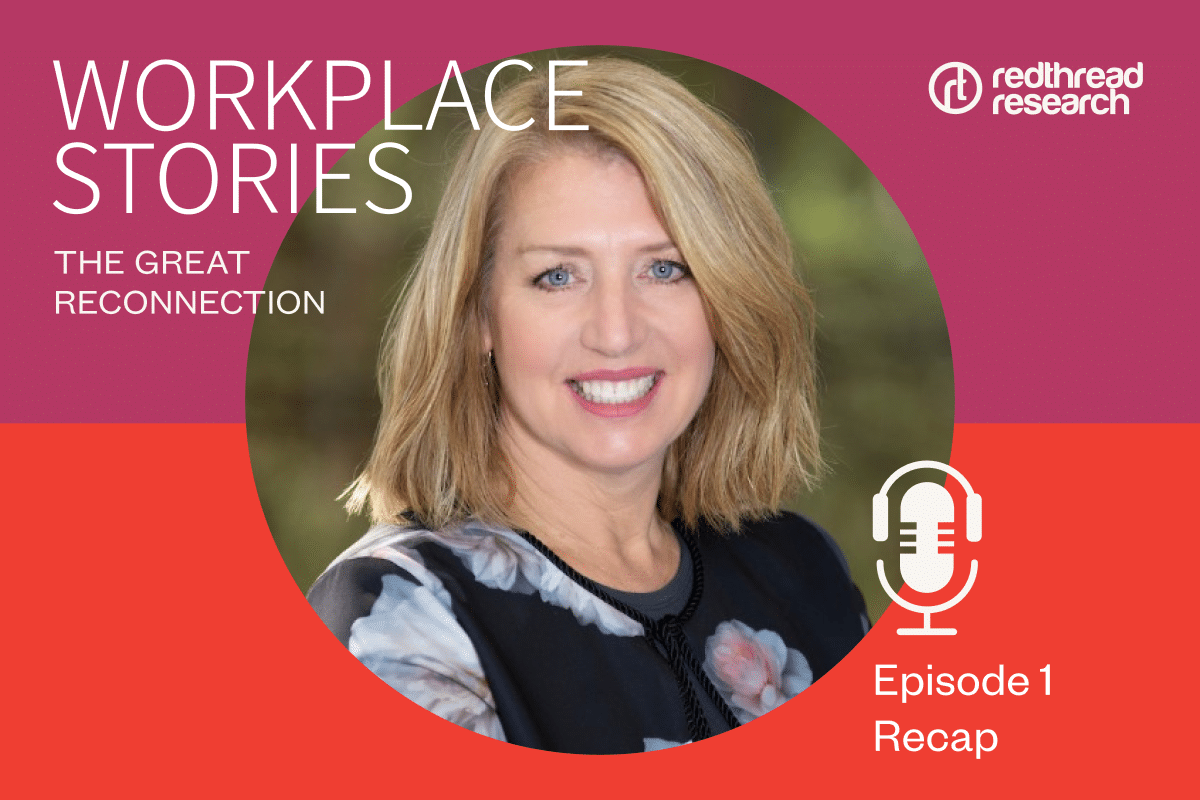
Workplace Stories is a podcast by RedThread Research. This season focuses on The Great Reconnection. The first guest, Liz Wiseman,speaks about leaders and how they can build connections with and between employees and within the organization.
Learn how transformational leaders can guide employees during these uncertain times through the power of cultivation.

Investing in your people with the support of coaches and mentors is how you make it through change, uncertainty, crisis, or downturn successfully.
Torch's community newsletter, Curiouser, offers a snapshot called Science Lessons that brings you bite-size behavioral science facts.

Torch-approved recommendations to satisfy your curiosity, straight from our community newsletter Curiouser.
Read Sarah Chapman Bacerra's Q&A where she discusses her work helping organizations create learning spaces and connect across differences.

Curiouser is Torch's monthly newsletter that acts as a resource for people leaders, coaches, mentors and behavioral scientists.
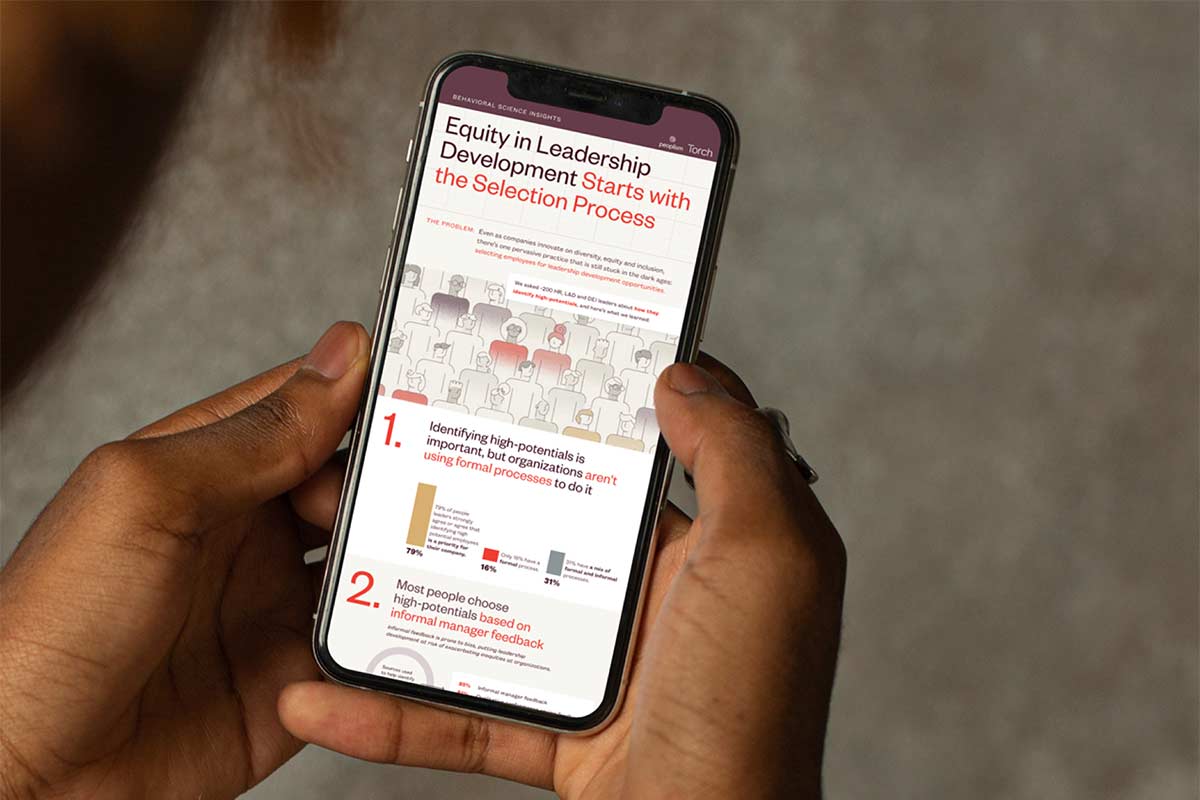
Equity in leadership development starts we the selection process, so we asked over 200 HR, L&D, and DEI leaders how they've done it.

Learn how PennyMac built an effective leadership bench during the COVID-19 pandemic with Torch.

How is structured leadership crucial to building trusted relationships? Elizabeth Weingarten chats with author Rachel Pacheco to find out.

How can we move beyond the status quo and create companies of belonging to help those individuals feel a sense of connection to the mission?
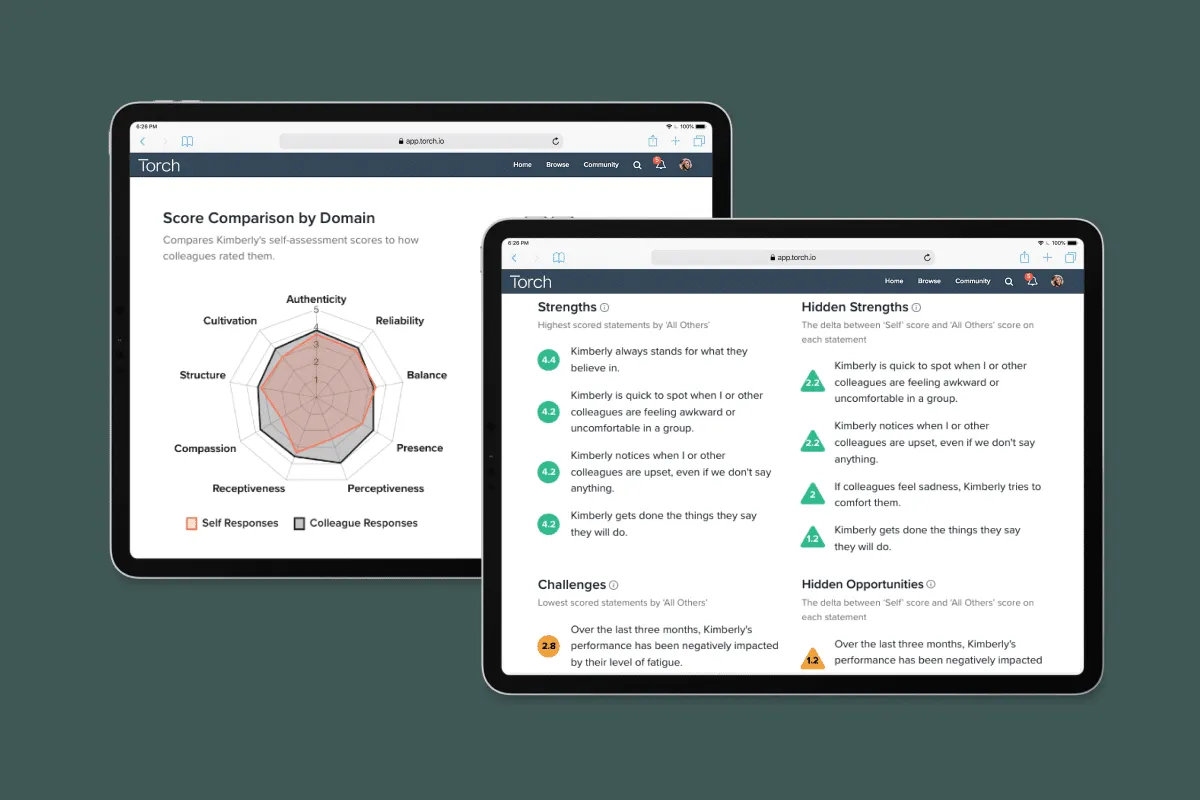
Increase self-awareness and accelerate the development of your people with the use of a 360 leadership assessment.
Anne-Marie Slaughter chats with Torch's Elizabeth Weingarten about her leadership journey and how her perspective on leadership has evolved.

Our capacity to be authentic—and to be perceived that way—can have powerful implications for professional growth and organizational success.
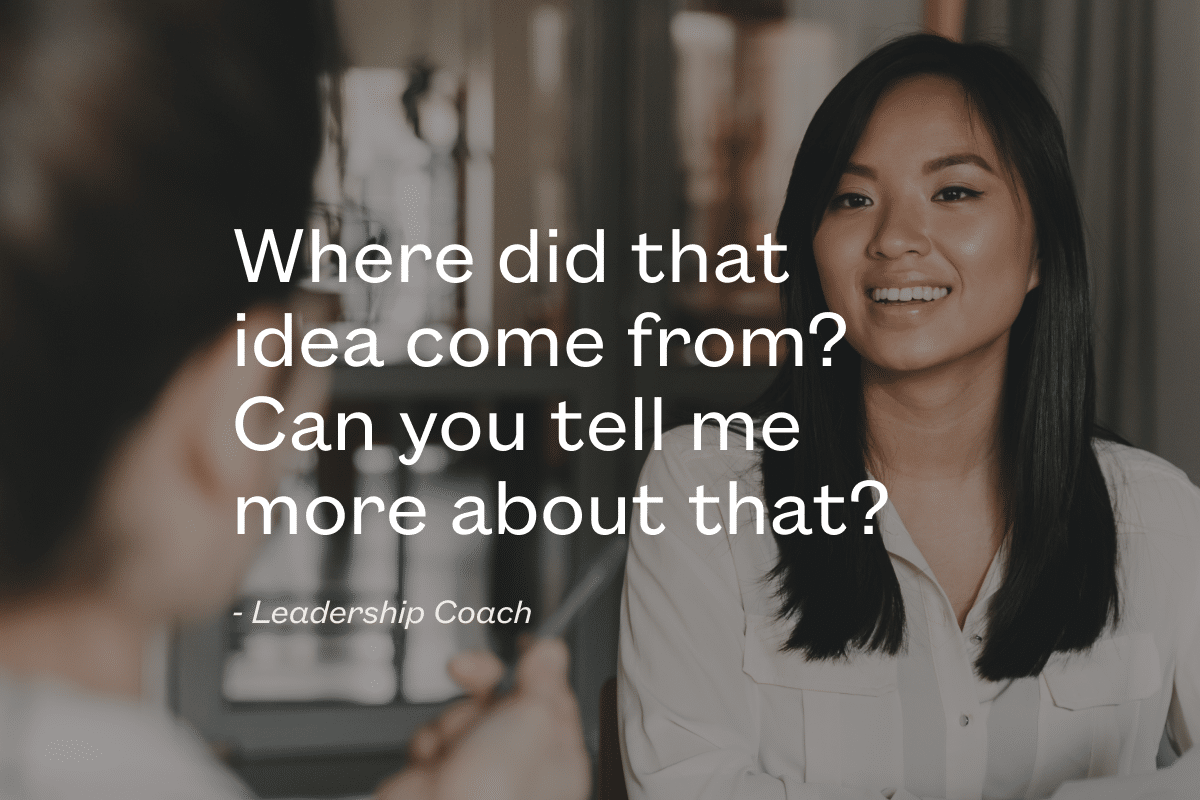
Coaching is helping to shape the future of people development by building a culture that helps employees ask the right questions.
Coaching is helping to shape the future of people development by building a culture that helps employees ask the right questions.

Leadership development has become increasingly important at all levels of an organization and shouldn't be reserved only for senior level executives.

Learn about the most common leadership awareness gap, leadership perception. Explore ways to learn about and how to fill this awareness gap from Torch.

Managers play a crucial role when it comes to helping organizations navigate change. Here's what HR teams can do to empower their managers.

Every relationship is different; there are clear signs that point to a successful mentoring partnership. Read here about the signs of a successful mentorship.

Starting a new relationship with a mentor or eager to get more out of your current mentoring relationship? Check out our cheet sheet for our top tips.

Mentoring has clear benefits for mentors and proteges, but what about for organizations? Check out our blog post to learn more about the upsides.

Learn why the 70:20:10 learning model is a useful resource and how to apply it at your company to support the development of your managers, HiPos, and more.

Leadership mentoring not only benefits mentees but also the organization and the mentors themselves. Learn more about the benefits in this post.

What are the ways that HR needs to adapt in this new world of remote work? We touch on three areas to consider in this post.

Learn why incorporating mentors into your long-term learning and development strategy is a great way to ensure your program has great ROI.

What are the behaviors associated with accountability, and how do they lead to successful management? We explore what is accountability in management.

What are the steps you need to take when creating a women’s development program? We share our top ones in this blog post.

What’s the difference between top-down and bottom-up management, and which approach is the best for your organization? We explain in this blog post.

Mentoring has had a powerful impact on some of the greatest leaders of our time. Check out these quotes for inspiration.

Learn how Twitch developed new manager and HiPo trainings at scale with Torch leadership coaching. Read the case study today.

What are the different types of mentoring programs you can introduce to your organization? We share five effective program ideas in this post.

What exactly is a growth mindset, and why is it so critical to have one when it comes to development? We explain in our blog post.

Having a coach helps you explore your strengths and areas of growth. Find out how to get the most out of each session in this quick guide.

Build a workplace mentoring program in six steps: set goals, select participants, agree roles, match people, launch and measure meaningful progress.

What is mindfulness exactly, and how can it help you be a better leader? Our co-founders explore this topic in our blog post.

What are the benefits of offering coaching and mentoring programs to your HiPo employees? We explain in this post.

There are many benefits to onboarding new hires. Why not apply the same process to your new managers? We show you how in this blog post.

How can HR leaders better support and amplify their ERGs? We share our recommendations in this post.

Leadership books can help you at every stage of your career. Here are 18 of our top recommendations.

Being a new manager is stressful, but coaching and mentoring can help. Learn more about the benefits of these programs in our blog post.

Torch mentor, Andora Gandy, shares helpful tips to build better leaders. Learn from Andora.

Torch leadership coach, Stephanie Staidle, gives leaders six pieces of advice to lead now. Learn from Stephanie.

Get insight from Torch's first Justice at Work ask-me-anything on how to push for social justice at work in election season and more.

What is the empathy-accountability spectrum, and what can it tell you about the way you lead? Find out in this blog post from our CEO.

Compare coaching, mentoring, cohort learning, manager enablement, and digital support, then design a leadership portfolio that stays relevant at scale.

Justice at Work is a Slack community for CEOs, L&D and HR Leaders committed to building just organizations.

Leadership styles are not one-size-fits-all. This article breaks down 10 common styles and their advantages and disadvantages.

To become a better leader you need a plan. We provide a template with easy-to-follow steps to create your personal leadership development plan - start now.

Dr. A. Breeze Harper introduces Torch’s new leadership course - Becoming an Anti-Racist Leader: Strategies and Action Steps for a More Inclusive Workplace

Coaching leadership is a style of leadership characterized by collaboration, support & guidance. Read this guide for a breakdown of pros, cons & how it works.

We wanted to know more about how the pandemic is affecting people’s outlook on what it means to work from the office once again. Here's what we found.

As conversations about racism and privilege are brought to the fore, here's how you can leverage your coach or mentor for support.

Best-selling author and coach Kim Scott shares why leaders and coaches should apply Radical Candor during a crisis. Check out our post to learn more.

It takes time to build resiliency, but this list of seven keys to becoming a resilient leader from Torch coach Jackie Schwabe is a good way to get started.

Learn what a 360 assessment can do for you as a leader, what to expect during your first review, and how to unpack the results with care.

The autocratic leadership style is known for taking a top-down approach and tends to draw mixed opinions. Learn whether this style is a good fit for you.

Explore what defines peer-to-peer learning, how to paritcipate in peer-to-peer learning as a leader, and the advantages of peer-to-peer learning now.

Transactional leaders are great in a crisis and for organizations seeking stability. What are the characteristics of this leadership style? We explain more.

Leadership means providing high-level vision while management is responsible for executing the vision. Read here to learn the differences between these two concepts.

Providing coaching for your leaders is an invaluable benefit. Ensure they get the most out of their relationship by finding the right coach match.

New to leading virtual teams? Get guidance from Torch coaches on how to translate your leadership skills to be most effective in a remote environment.

We explain exactly what transformational leadership is, when it should be used, and how to apply this style to your own position as a manager or team leader.

In need of some leadership inspiration? Check out these quotes from some of the most beloved and respected leaders in today’s society.

Asking for help from others can make you a better leader. Learn more about the power of asking for help and strategies on how best to approach it.

Thriving in a new leadership role requires a diverse skill set that doesn’t always come naturally. Find out how to set your new managers up for success.

When leaders display empathy, their teams are generally happier and more productive. This article will show how leadership empathy manifests in our data.

Only when you take responsibility for creating a consolidated and integrated roadmap for yourself can you become a coachable leader. We'll show you how.

Overall, leadership integrity ratings skew quite high in our data. However, for more experienced leaders, our analysis provides a word of caution.

Learn about our newsletter, which contains deep insights we discover at Torch that can help you become a more impactful leader.

How much of your life does self-blame impact? What would your life be like if you could eradicate self-blame and finally trust who you are? Find out.

Many people who start leadership coaching for the first time have doubts. Find out if you share or have heard any of these three common doubts/myths.

Power of influence is the single most important quality of a leader. Develop these 6 skills to strengthen your leardership influence and drive success.

Change champions are the most persuasive voices on behalf of their employees, and their results can be astounding. Learn how to become a champion of change.

The holy grail is a founder with a healthy level of narcissism, surrounded by a circle of trusted colleagues who are unafraid to call them on their BS.

Learn the difference between top-down and collaborative leadership styles, and how to break free of traditional silos and cultivate a collaborative culture.

Check out our tips for making small leadership changes that have a large impact on organizational culture.

Check out our tips to develop a unique leadership style that matches to your personality and the specific challenges and mission of your company.

Successful executives need to know how to delegate effectively. Find out why addressing failures and avoiding additional tasks are key to delegation.

Guide your employees to define clear and actionable short- and long-term goals to make sure they feel motivated and challenged to grow. Find out more here.

Find out more about the long-term benefits of a positive company culture and how to establish it at your own organization.

Having doubts about expressing your mission, taking the next steps? Identify and overcome roadblocks to leave your leadership comfort zone.

How do posture, eye contact and facial expressions contribute to a performance review? Find out more about non-verbal feedback in our blog post.

The first step to repair damaged employee relationships is to acknowledge there's a problem and hold additional one-on-one conversations. Learn more.

We discuss how to follow-up on hard feedback and ensure that an employee acts to improve their performance and communicate if they're struggling.

How do successful startup CEOs balance their time? From recruiting to fundraising, we look at the demands on a CEOs time and how to find balance in growth.

Avoiding micromanagement and finding a healthy middle ground in management is a challenge. Learn how to create a balanced management style.

Hard feedback is the lifeblood of a healthy company. Check out our recommendations on how to deliver tough, constructive feedback.

Learn why it's important to build a communications plan that ensures every member of the team understands the organization’s goals and is fully aligned.

Check out our tips on how to deliver negative and positive feedback during a performance review and make the most of this important conversation.

We look at three common people problems for early stage startups and how you can address them to lead your startup to success.

It’s impossible to be 100% ready to run a company - but a strong support structure and a clear focus can help new CEOs with their transition. Learn more.

Take a closer look at the five core skills of emotional intelligence in leadership and how to develop them in your company.

Having the ability to influence others is essential for all company leaders. Learn how to cultivate this skill using the recommendations in our post.

As an executive in a growing company, it’s difficult to disconnect from the constant activity - read our suggestions on how to get productive time alone!
Communication is one of the main challenges for successfully cooperating as a global team. We explain how to improve this critical skill.

Explore a glimpse into how M. Seibel thinks about leadership attributes and some contrarian views that may be at the heart of how he picks great companies.

Strategic thinking is an essential skill of highly effective leaders. Help employees develop as strategic thinkers faster through shared learning experiences and mentoring.

The right time to set your leadership goals for 2019 is now - more on how to set SMART and HARD goals in our blog!

Career planning is an essential part of L&D. Help employees develop as individual, achieve goals, and learn and grow in their jobs.

Why is it important to implement work-life boundaries for yourself as a leader, and how do you establish them? Find out more in our blog.

Learn how Scribd provides executives and new managers with Leadership Coaching to ensure employees at all levels are set up for success.

Credibility separates a boss from a leader - read our tips on how to build credibility with your team by giving respect and demonstrating loyalty.

Leadership Development and Performance Management are key to workforce retention - but how do they differ? Find out in our blog post.

Which steps can you take to bring employees back from burnout? Personal actions are the most effective remedies - find out more about it in our blog post.

There’s a significant gap between feeling stressed and a full blown burnout, so if you can recognize the presence of symptoms early enough, you can act.

Learn how RMS leveraged Torch Leadership Coaching to provide manager training and an improved performance review process for all

Baby Boomers approaching retirement are the fastest growing segment in the workforce. Learn how to keep older employees motivated to help them excel.

So, you’ve made the decision to let someone go. What do you do now? Learn more about the timing, preparation, and communication needed to fire with compassion.

What are readme files for managers, and how do you use them? Learn how to write these short guides to help employees work effectively with managers.

What's the secret to a successful co-founder relationship? Read about our simple, yet sometimes not-so-easy advice in this article.

What are the best tactics for leading your employees through rapid changes like market disruptions or growth opportunities? We discuss four helpful tactics here.

Learn how Best Buy created a mentoring program to connect underrepresented minorities and women with leaders across the organization to develop

In our CEO interview series, Justin Kan talks about how his mother influenced his leadership style and his success as an entrepreneur - find out more here.
In our CEO interview series, Justin Kan talks about how his mother influenced his leadership style and his success as an entrepreneur - find out more here.

We share insights on the biggest talent challenges fast-growing companies face - from hiring to promoting from within. Learn how to address these issues.

Stepping into a management role is a big transition. Help your first time managers get a head start with these three things they should know.

There are several management misconceptions people have about what it means to lead a team. We discuss six of the most common ones and how to adress them.

We dive into five rarely discussed traits that can signal successful managers, whether they're new to the role or looking to grow. Plus, tips and tactics for better achieving management success!

Measuring how well a development program is working validates your efforts, not just to you and employees, but also to management. It identifies when the status quo isn’t working and where change is needed.

Learn how the environment leaders create for their reports, how they live their values, and their self awareness determine effectiveness of leadership.

Organizations should be preparing their next leaders to be effective through talent development - that means addressing Millennial talent development needs.

Explore a glimpse into how M. Seibel thinks about leadership attributes and some contrarian views that may be at the heart of how he picks great companies.
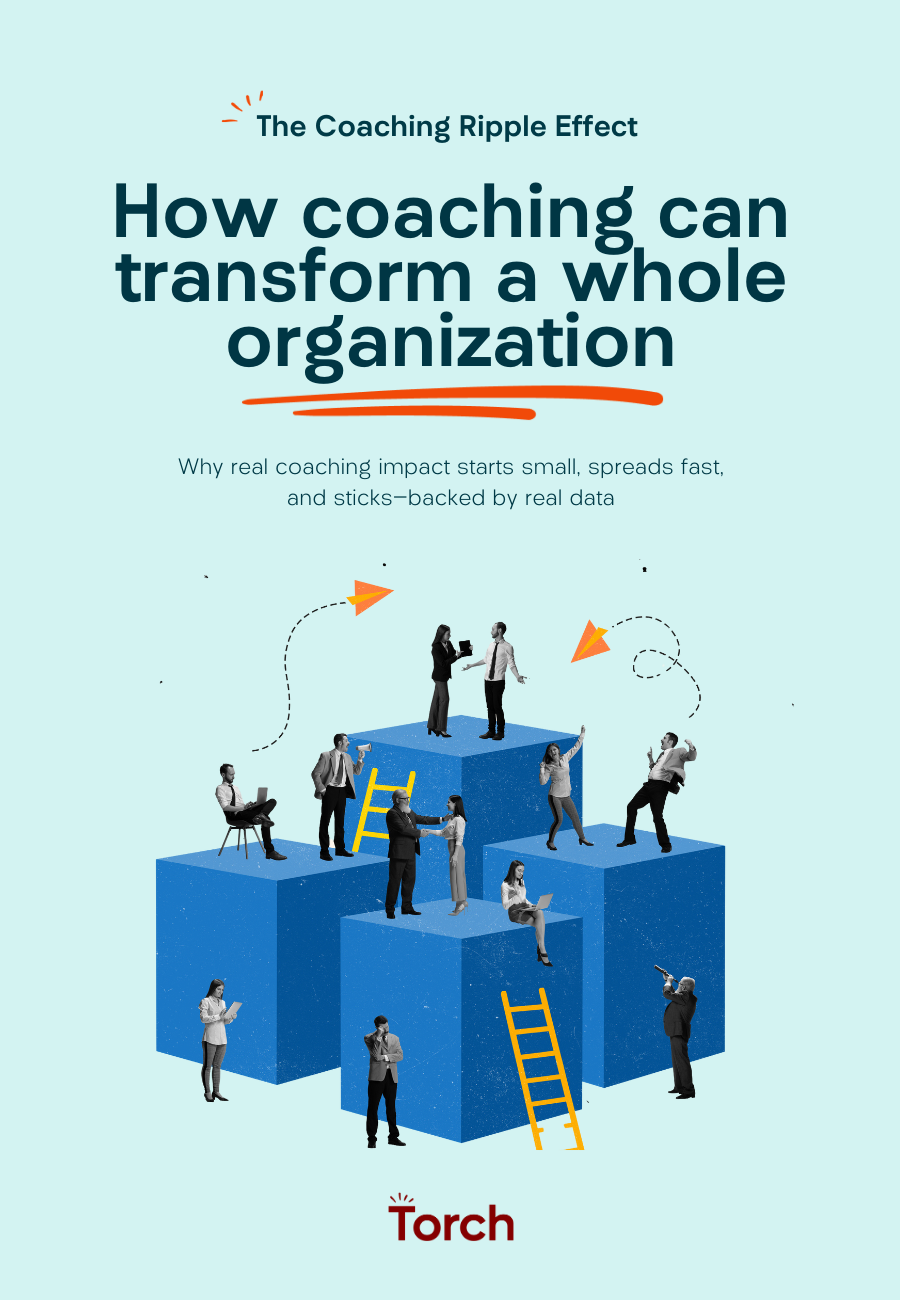
Download the guide to discover how coaching creates organizational transformation that starts small, spreads fast, and sticks.
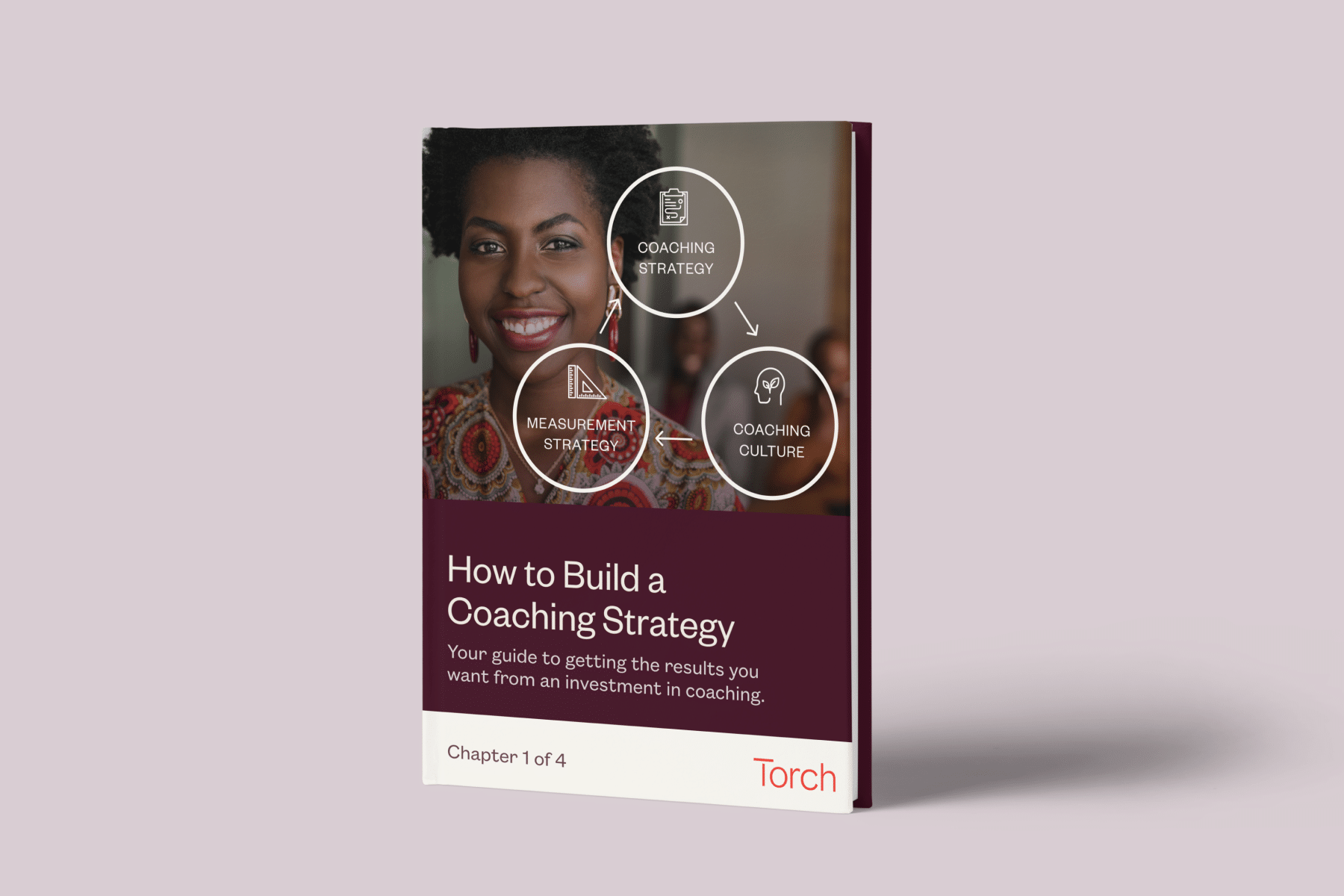
Get chapter 1 of Torch's eBook, How to Build a Coaching Strategy, and start your journey to getting results from your investment in coaching.
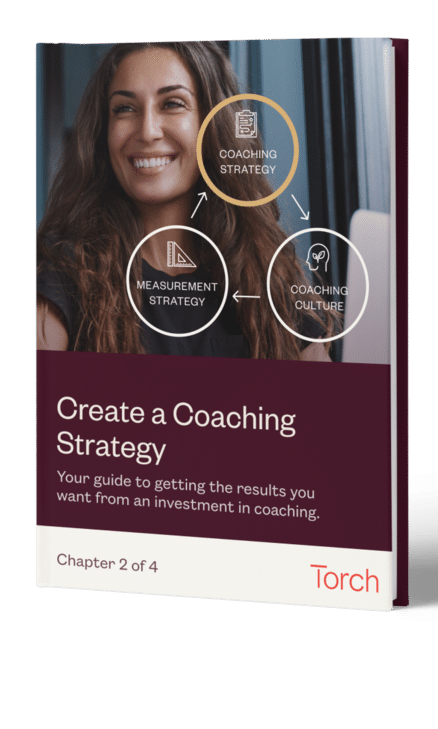
Get chapter 2 of Torch's eBook, How to Build a Coaching Strategy, to learn how to get the results you want from an investment in coaching.
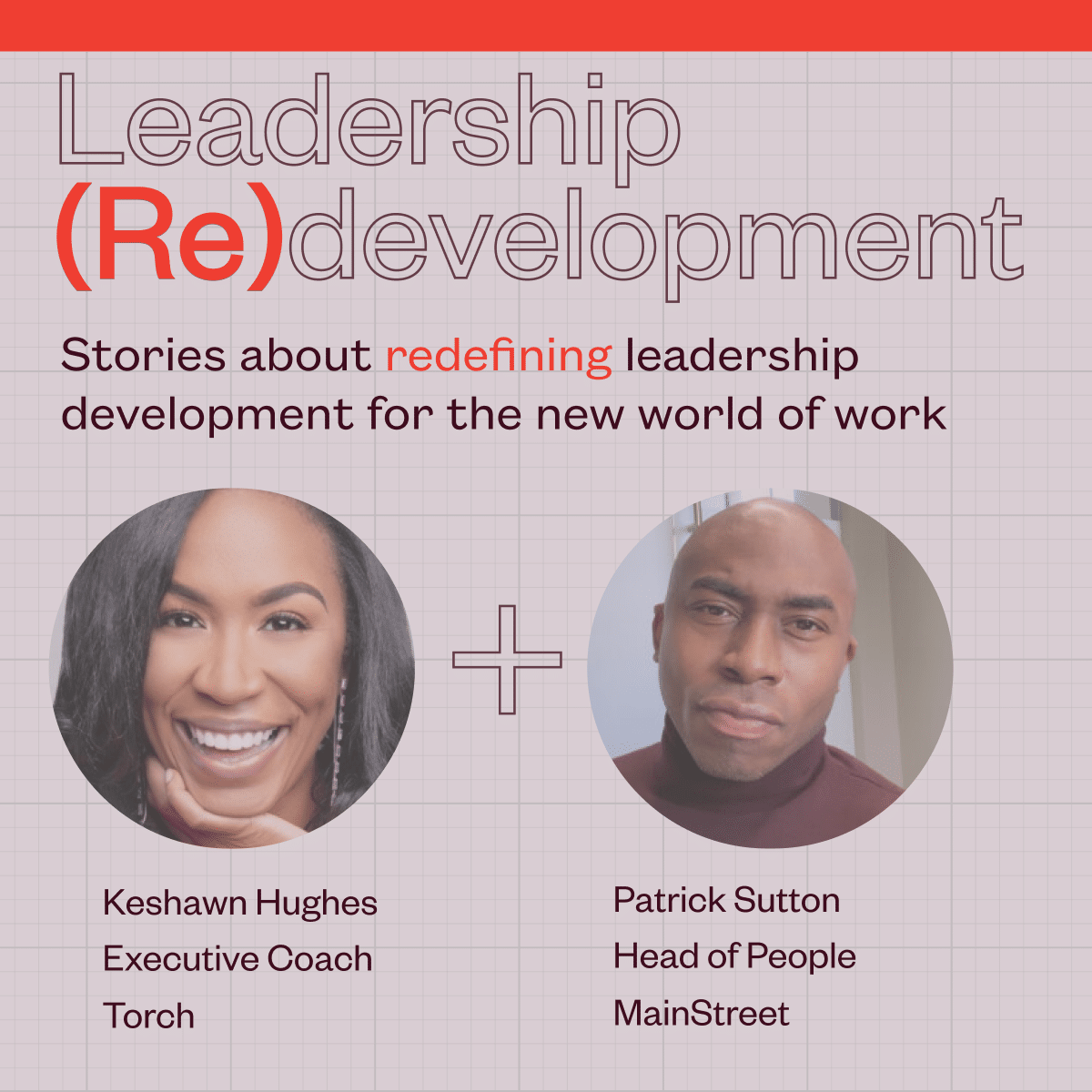
Watch the on-demand recording of ourLeadership (Re)Development series. In this installment, Elizabeth Weingarten is joined by Patrick Sutton, Head of People at Main Street, and Executive Coach Keshawn Hughes, to discuss how creating the right leadership development strategy can help organizations avoid using buzzwords, and ensure they’re set up to reap the benefits of inclusive leadership.
If you’re ready to invest in a coaching platform for your organization or you’re expanding its benefits to more leaders, this guide is for you. It is full of tips, cheat sheets, and worksheets to help you create a strategy, plan a program, identify stakeholders, and navigate the selection and purchase process for your organization.
Discover how leading companies like TripAdvisor, FICO, and Reddit transform their organizations through contextual coaching. Read customer success stories and real results.
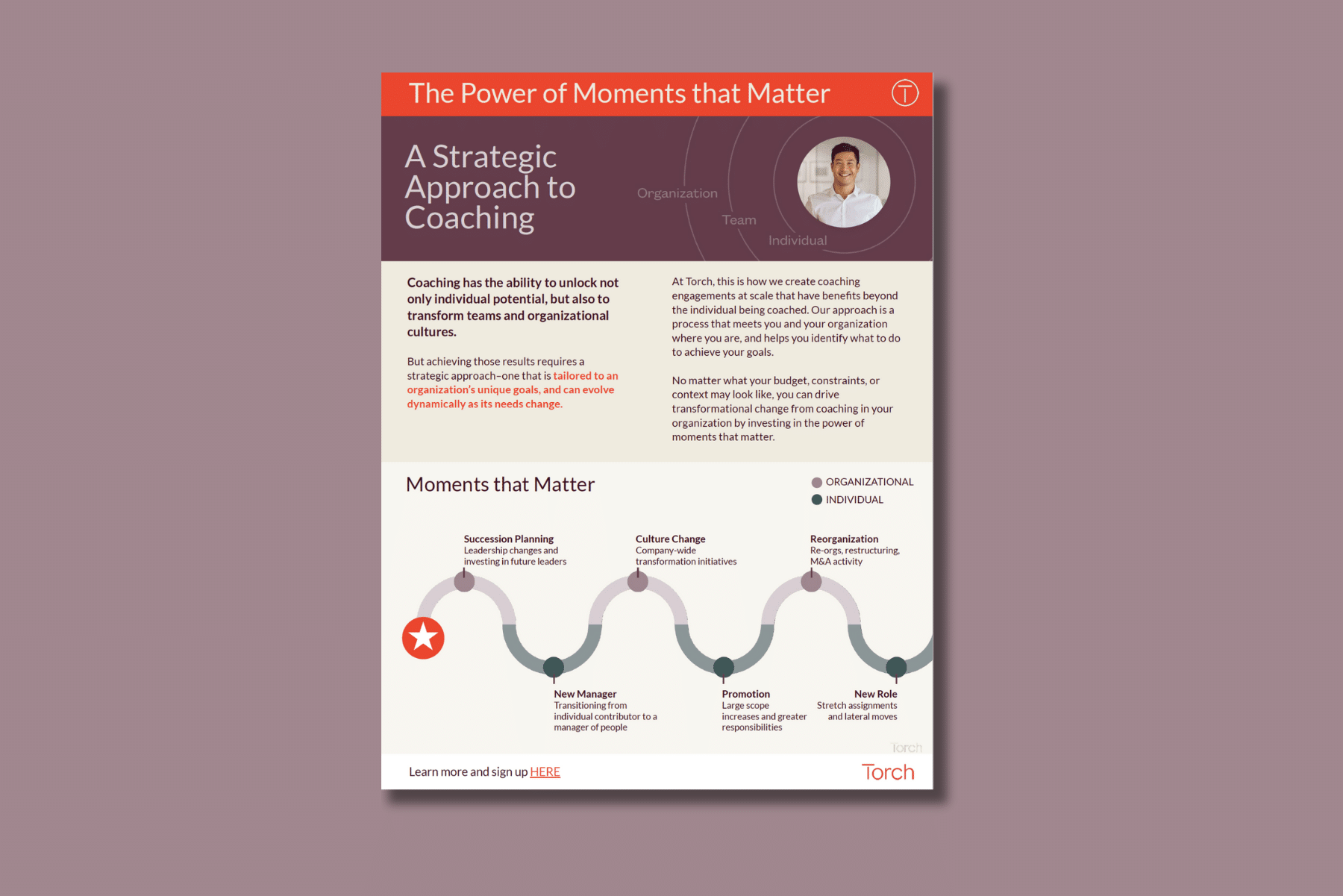
The Torch approach to creating your coaching strategy includes capitalizing on moments that matter; pivotal periods marked by transition and growth.

A Q&A with Leadership Professor Linda Ginzel on redefining leadership. It’s a question we think about a lot these days, but 50 years ago it was a new topic of investigation: what are the traits of an effective leader?

We're thrilled to announce that we raised our Series B! Here's what we have planned for our latest round of funding.
Watch this on-demand webinar for actionable recommendations to create an equitable selection process for leadership development programs.
Find out how to get the most out of your leadership development programs with group coaching in this one-hour on-demand webinar with Waymo.
How are top performing organizations meeting this challenge, and what can we learn from their example? That's what a new Harvard Business Review Analytic Services report, sponsored by Torch, sets out to answer. Featuring Bindu Garapaty, VP, Talent and Inclusion, Diversity, & Equity, Impossible Foods, Cynthia Burks, Board Director, Advisor, Former CHRO, and Torch's CEO Cameron Yarbrough.
How to move from a command and control leadership style to one focused on coaching and collaboration.
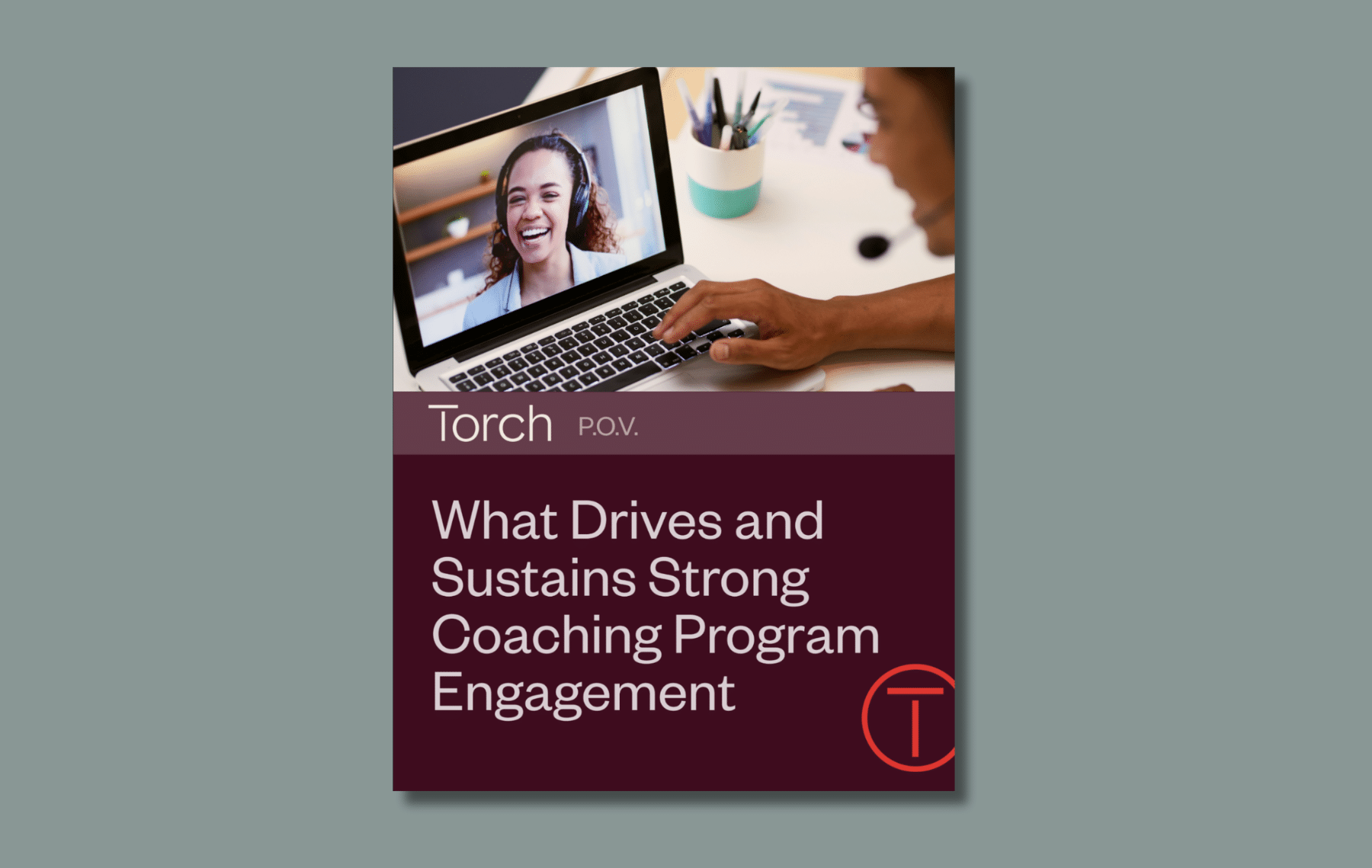
This Torch "point of view” guide is focused on explaining the the factors that drive, and sustain, strong coaching program engagement.
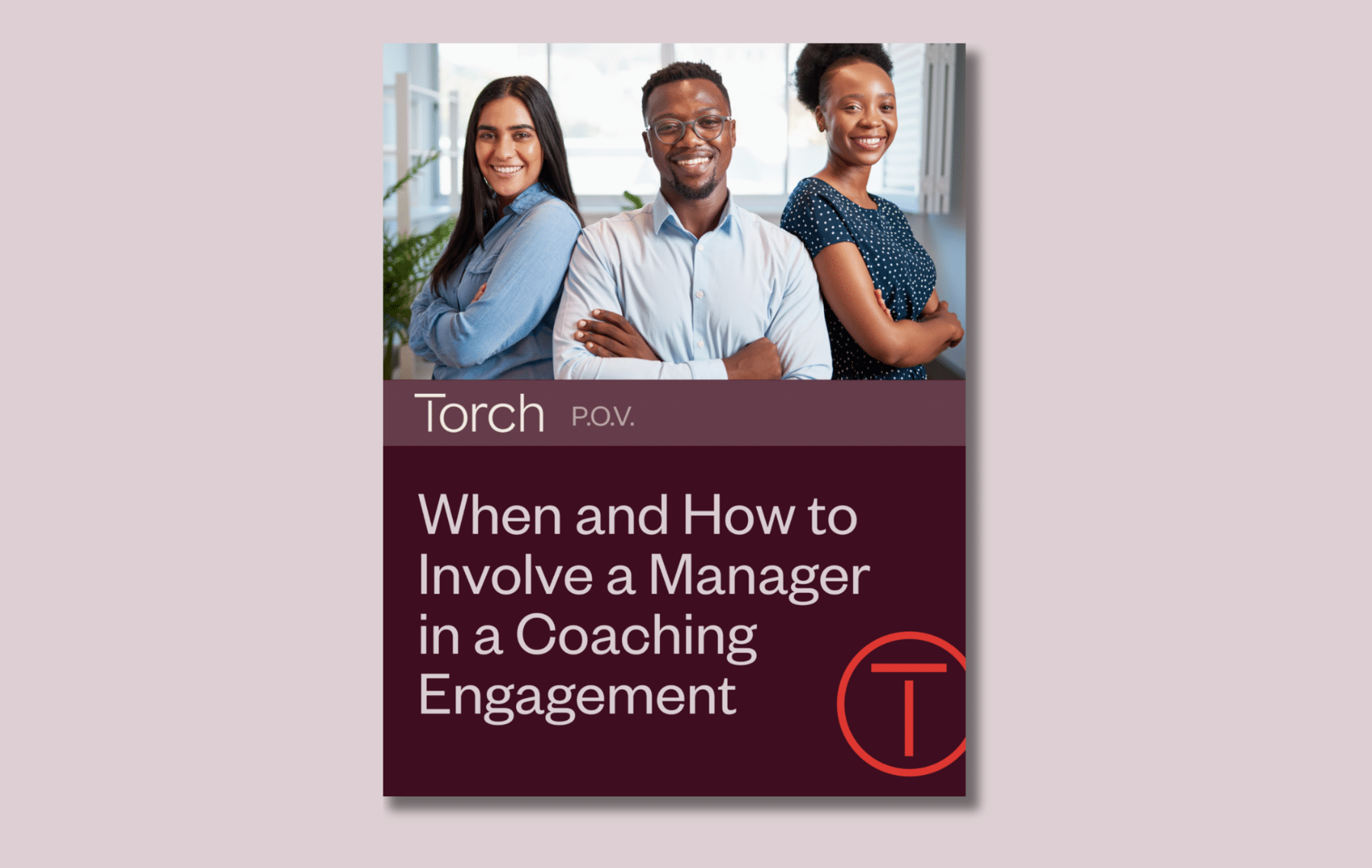
This Torch "point of view” guide is focused on how and when to involve managers in a coaching engagement.

Defining coaching program goals starts by anchoring your purpose in the organization's objectives. Download this editable worksheet to map the key elements of your strategy.
Try a different search or clear the category filter.
Browse at your own pace.
Explore how Torch coaching can support your leaders.
Become a Torch Changemaker.
Request your consultation