


Resilience isn’t a nice-to-have.
Continuous demands without support burn people out and fracture culture. Resilience isn’t a perk or a one-time program. It’s a capacity you build over time, so teams can sustain pressure without breaking.

Where resilience breaks down
Trust erodes when pressure never lets up. Burnout spreads. Culture fractures. Quick fixes don’t work because they don’t address the underlying capacity gap.


One-on-one coaching helps leaders develop the personal resilience they need to sustain teams under pressure. Coaches work on emotional regulation, boundary-setting, and the capacity to create space for others when you’re feeling depleted yourself. Leaders can’t pour from an empty cup.
Learn more about 1:1 coachingCohort-based learning connects peers facing similar pressures. Participants develop resilience capacities in community: sharing strategies, normalizing struggle, and that shared understanding creates space for growth.
Learn more about group coachingCoaching doesn’t operate in isolation. Spark can reinforce what coaches teach in daily work. Org Intelligence shows where coaching is building impact across teams, allowing coaches to see patterns across the organization and adjust their approach as needed.
Learn about our approachLEADERSHIP CAPACITIES
Capacities that sustain performance
Resilience comes from developing capacities that help people recover from setbacks, maintain trust under pressure, and stay focused.
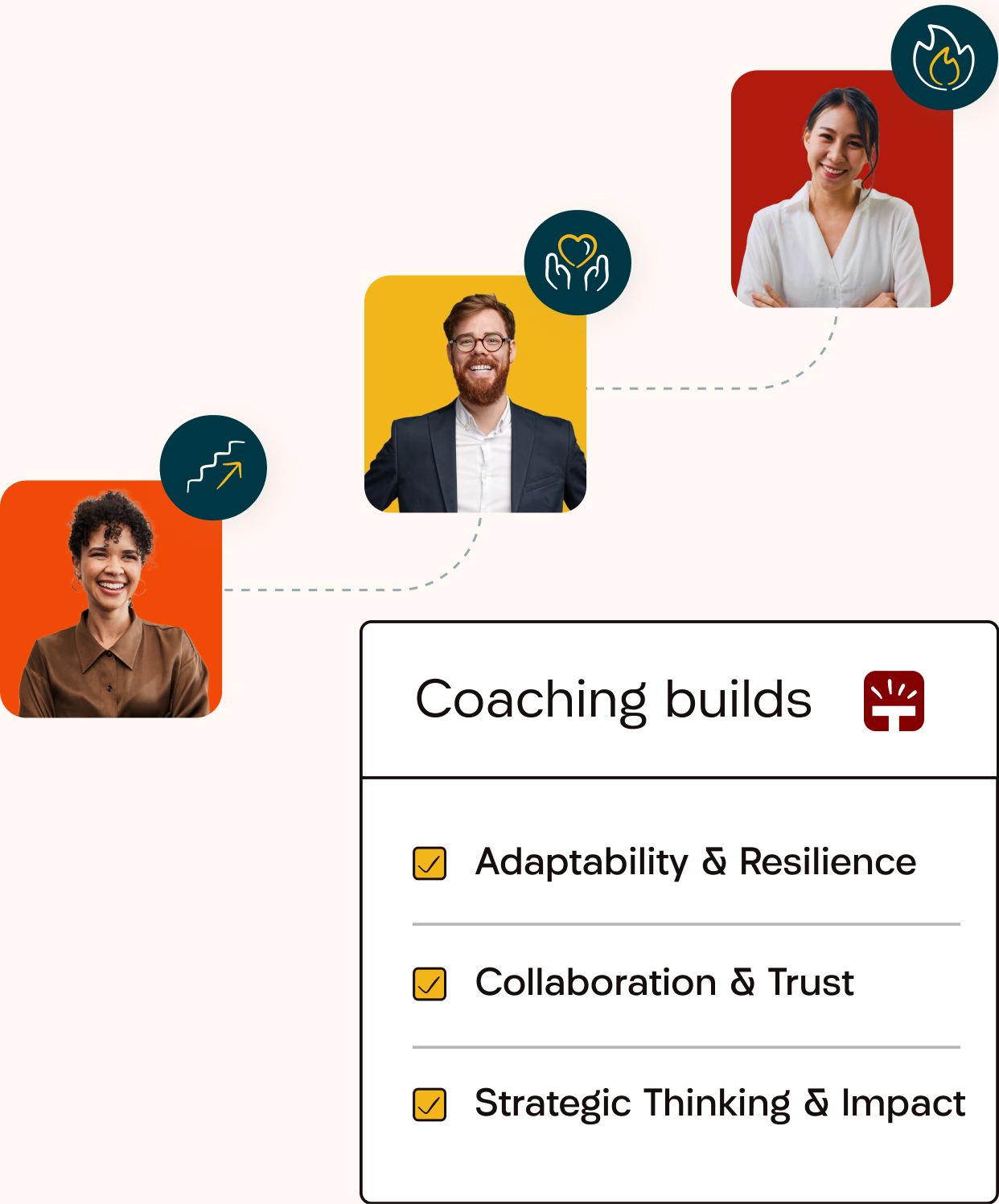
The capacity to navigate uncertainty without freezing or burning out. Leaders learn to quickly make decisions, adjust when plans change, and help teams stay focused when everything feels chaotic. Adaptability reduces the cognitive load that leads to exhaustion.
Create psychological safety when pressure is high. Leaders develop the capacity to own mistakes, demonstrate consistency, and make space for dissent, so people feel safe taking risks and speaking honestly.
The capacity to recognize and manage emotions in yourself and others to prevent burnout from spreading. Learn to regulate stress responses, read team dynamics , and create space for recovery.
The ability to stay grounded in purpose when everything feels like pressure. Leaders develop clarity on what matters most and the capacity to protect that clarity when demands compete. Purpose sustains people when motivation alone isn’t enough.